Hobart and Launceston
The two cities are 200 km apart, about two hours twenty by road, and each has its own small chain. There are no public walls on the north-west or east coasts, so the nearest for Devonport and Burnie are in Launceston, 100 km and 147 km away.
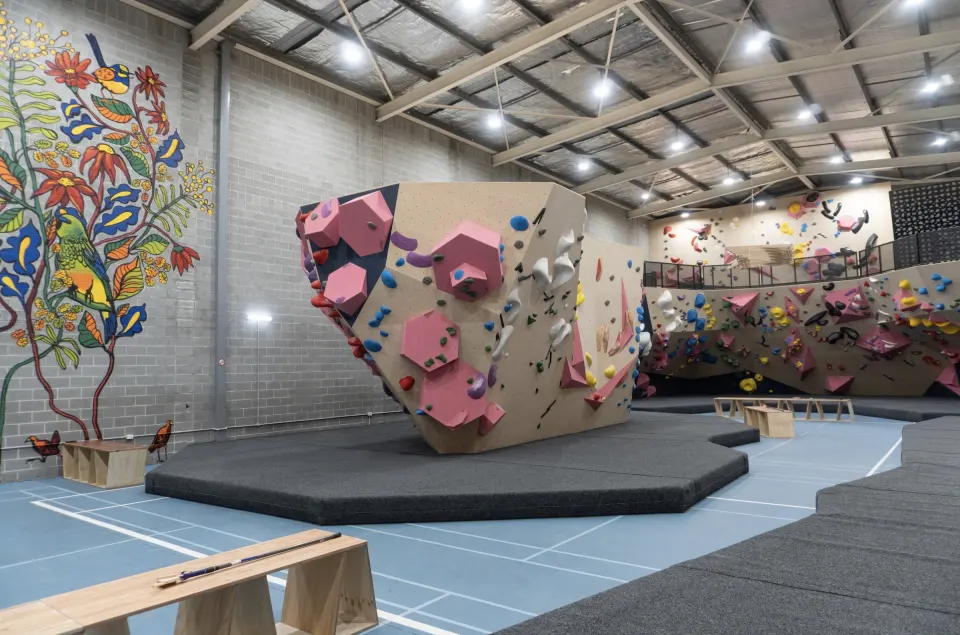
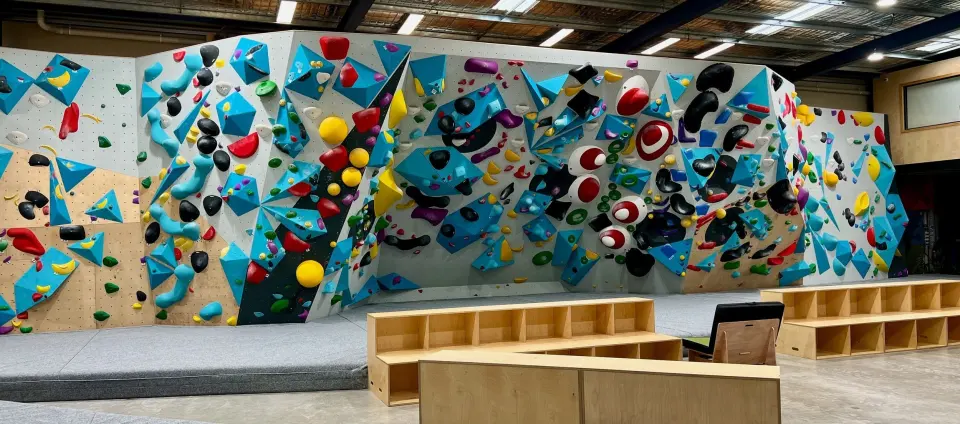
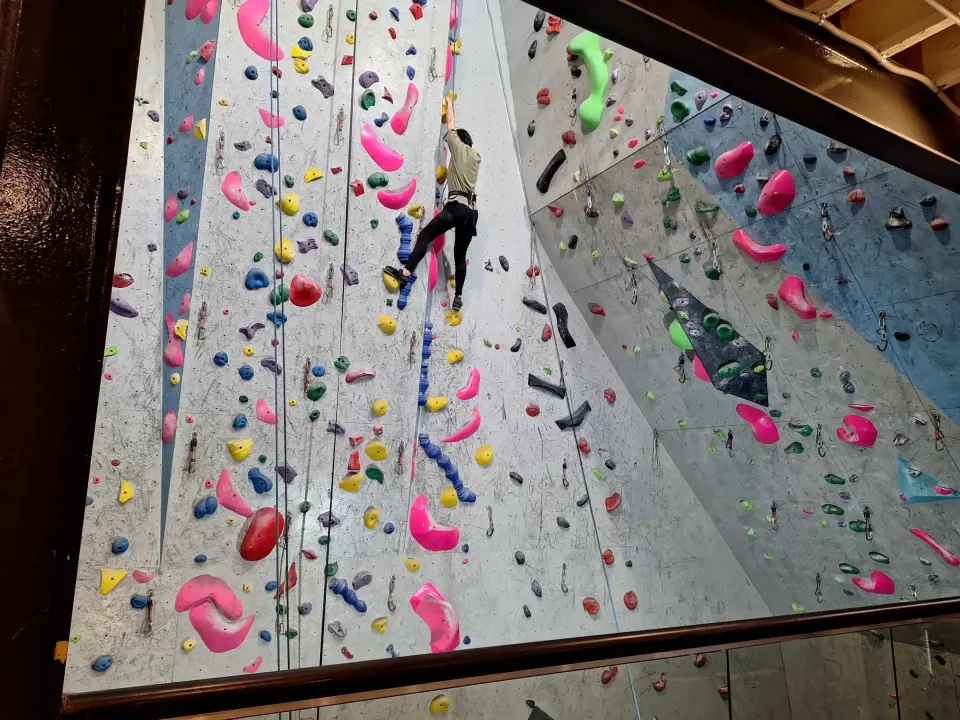
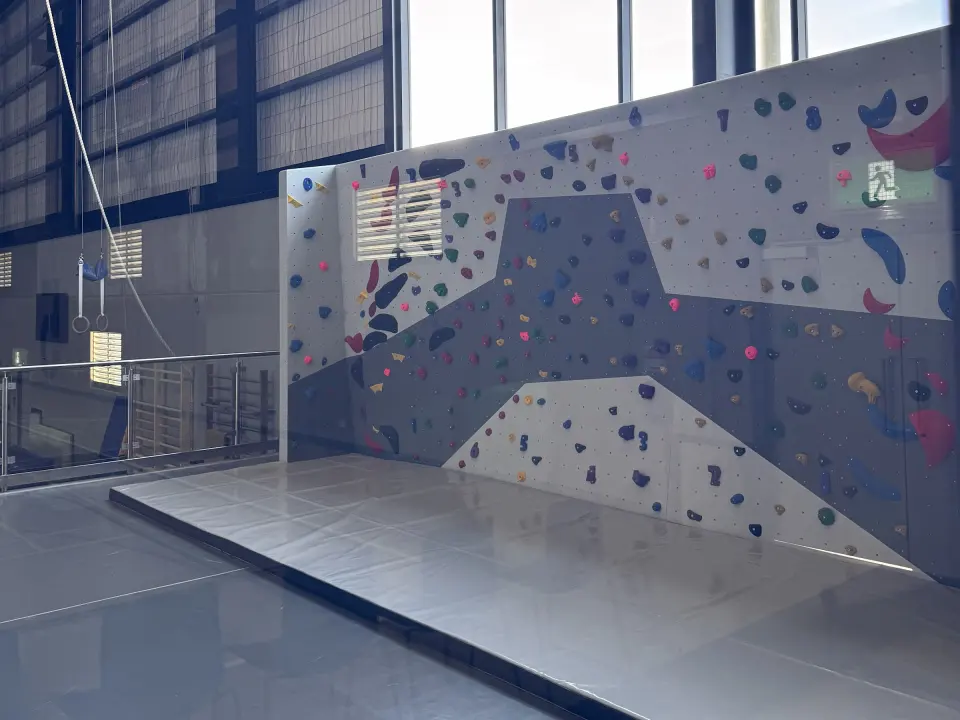
Hobart. Rock It was started by local climbers in 2013, and its memberships and 10-visit passes work at both its gyms. Rock It Hobart, on Bathurst Street, spreads roped walls, bouldering and ten crawl-through tunnels for children over three storeys. Rock It Derwent Park, about ten minutes' drive north, is bouldering only, with a steep cave, a competition wall, a Kilter Board and a café. The University of Tasmania's mountaineering club, TUMC, opens the wall in the Hobart Unigym at Sandy Bay to its members on weekday evenings in semester.
Launceston. Beta Park Bouldering opened in Invermay in 2020 and is open every day of the year, with 4.5-metre walls graded on its own eight-level scale and a café serving pizza and Tasmanian beer. Its roped sister, Beta Park at The Hub, is an 11.5-metre top-rope wall with more than 30 routes inside PCYC North's community recreation centre in Mowbray. When Beta Park opened, the Examiner reported that its owner also co-owned Rock It.
Bouldering, ropes and lead
Bouldering leads: three of the four public walls have it, and Derwent Park and Beta Park both keep a competition-style wall, with a fresh comp problem at Beta Park every Monday. For ropes, Rock It Hobart has top ropes, auto-belays and the state's only public lead walls, up to 9 m; its Learn to Lead course costs $160 ($125 for members), followed by a lead test. At The Hub everything is on top rope and climbers belay each other, and children under 13 climb with a parent who belays them.
Prices and passes
A day pass costs $20 at either Rock It gym ($18 for students) and $23 at Beta Park Bouldering ($21), where a 7-day pass is $52. Memberships are billed weekly: $28 a week at Rock It (about $121 a month) covers both Hobart gyms, and Beta Park charges $32 a week for bouldering, $25 for The Hub or $42 for both. Shoe hire is $6 in Hobart and $5 at Beta Park Bouldering. Climbing shoes are required at Derwent Park and Beta Park Bouldering, but closed-toe shoes will do at Rock It Hobart.
Kids and first-timers
Rock It Hobart is the family venue, with its tunnels, a kids' cave and term-time squads from age 6 at $90 a month, climbing included; older juniors can move up to its competition-minded Junior Team. Derwent Park's First Time short course ($25) comes with shoe hire and a free week of climbing. In Launceston, The Hub's Kids Climbing Club costs $35 a week by the eight-week term, Beta Park runs a kids' club and a youth coaching team, and both gyms run school holiday sessions. Under-12s need an adult with them at Rock It, and under-13s at Beta Park.
Competitions
Sport Climbing Tasmania runs the state's competitions on Sport Climbing Australia's calendar: lead titles on Rock It Hobart's lead walls, and bouldering titles that have moved between Derwent Park and Beta Park. Open B is for recreational climbers and first-timers, alongside Open A and Masters, and a youth bouldering series in Hobart feeds selection for the Tasmanian team at the Youth Nationals. Entrants need SCA membership, $40 a year. Rock It also runs points series for its regulars, on its boulders in winter and on its top ropes.
Climbing outdoors
Above Hobart, the Organ Pipes on kunanyi / Mount Wellington are a dolerite escarpment with more than 400 recorded routes: long pitches on natural gear with alpine exposure, where the weather changes fast, bringing sleet, snow and cold southerlies. Lower down are shorter sandstone crags, and the park has more than 300 boulder problems.
Launceston has Cataract Gorge, with more than 800 routes on dolerite buttresses in the city itself, and Hillwood to the north, whose 150-plus routes on featured basalt make it a contender for the state's best sport crag. Ben Lomond, just over an hour away, is a summer destination: most of its 230-plus routes are on the northern escarpment, and many climbers rate its cracks the best in Australia.
On the east coast, Freycinet's white granite sea cliffs near Coles Bay suit beginners: Lassies Wall and Whitewater Wall, which has more than 50 routes, have the state's best climbing in grades 10 to 17, and December to March is the best time to go. The Tasman Peninsula has the sea stacks: the Totem Pole, a 65-metre dolerite pillar off Cape Hauy first climbed in 1968, is reached by abseil and left by Tyrolean traverse, and the Candlestick beside it is taller still. Remote Frenchmans Cap has quartzite cliffs at the end of a 25 km walk from the Lyell Highway.
A parks pass is needed in all Tasmania's national parks, including Freycinet, Tasman and Ben Lomond. Route descriptions are free on theSarvo, the local climbers' online guide, and Gerry Narkowicz's Climb Tasmania guidebook covers 1,280 routes at 35 of the best crags.